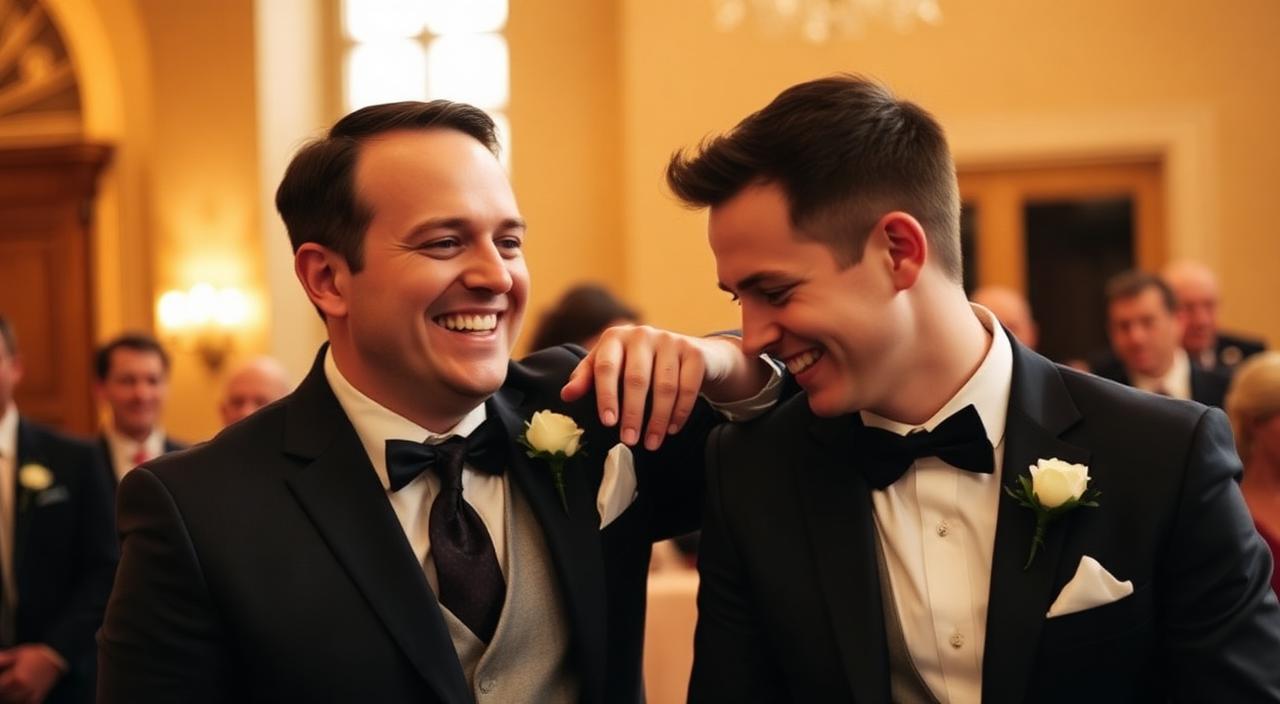
Best Man Speech for an Older Brother (When You're the Younger One)
There's a particular kind of pressure that comes with being the younger brother giving the best man speech. You've watched this person your whole life. He's always been ahead of you — older, taller for a while, doing the things you weren't quite allowed to do yet. And now you have to stand up and roast him in front of his new in-laws.
I wrote one of these for my older brother three years ago. It went well, but only because I made a few decisions early that I want to walk you through. The default younger-brother speech is cute, and cute is the enemy. We're aiming for something better than cute.
If you want a draft to start from, the generator will spit one out based on your brother's name and a few stories. You can rewrite the bits that don't sound like you — most people do.
The problem with being the younger one
Three things will go wrong if you don't think about them in advance:
- You'll sound like a kid. Your default register around your brother is little-brother register. The room doesn't want that — they want an adult talking about another adult.
- You'll lean too hard on childhood stories. They're easy material, but a wedding crowd has heard "when we were kids" speeches a hundred times. They glaze over.
- The room will underestimate you for the first thirty seconds. This is actually your superpower — but only if you use it.
Address all three head-on, and the speech writes itself.
Step 1: Open by acknowledging the dynamic
The room is already thinking "aw, the little brother." Beat them to it.
"For those who don't know me, I'm Joe — Adam's younger brother. I should warn you up front: I've been preparing for this speech for thirty-one years, which is approximately how long Adam has been telling me I'd never get to do anything important."
That one line does three jobs. Names you. Names the dynamic. Gets a laugh. Now you're free to talk like an adult for the next six minutes.
If you want twenty more openers in the same vein, the opening lines collection has more.
Step 2: The "one story they haven't heard" rule
Your parents will have told every story already. Your aunts will have heard the school stories. The bride's family doesn't care about the holiday in Cornwall in 2003.
So find the one story nobody in the room knows. Usually that's a story from his early twenties — the gap year, the first job, the year you both lived together. That window is yours alone, because your parents weren't there and his older mates weren't either.
That's where the comedy and the heart live. Use it.
Step 3: Be specific about what changed when he became an older brother to you
This is the move that wins the room over completely.
Don't say "he's always looked out for me." Everyone says that. Say what he did. Be specific.
"When I was seventeen and I crashed Dad's car, Adam was the one I rang first. Not because he'd know what to do — he was twenty and equally panicked — but because I knew he'd be there before Dad found out. That's been the pattern for twenty-five years. I get into something stupid, he turns up. Sarah, you've signed up for a man who turns up. That's the best news you'll ever get."
That's the heart of the speech. One specific story, one specific quality, one line that pivots it onto the bride. Bang.
Stuck on the blank page?
Get a personalised first draft in about 60 seconds. Free, no signup.
Try the speech generatorStep 4: The bride bit (this is where you score)
When you're the younger brother, the bride bit is your big opportunity. You've watched him change. Use that.
"I want to say something properly to Sarah. I've known Adam for thirty-one years — longer than anyone in this room except our parents. And I can tell you, hand on heart, that the version of him sitting at the top table right now is the best version that's ever existed. That's down to you. So thank you. From me, from our parents, and from the version of Adam who used to think microwaving a hard-boiled egg was a viable life skill."
Specific. Warm. Funny on the way out. Perfect closer for the bride section.
Step 5: Don't try to roast him
Older brothers can roast younger brothers. It's funny because the dynamic punches down with affection. But younger brothers roasting older brothers reads as resentful, almost without exception.
Punch up. Tease the things you've always teased him about (his music taste, his driving, his inability to dress himself before age twenty-three) — but never anything that sounds like you're still annoyed about it.
The vibe you want: I have spent my whole life looking up to this man and I am also going to take the piss for seven minutes because that's how brothers love each other.
The structure, in one go
- Open with the younger-brother dynamic (30 seconds)
- One specific story from his early twenties (90 seconds)
- The thing you admire about him, with a story to prove it (90 seconds)
- Compliment to the bride that pivots from a tease (60 seconds)
- The toast (15 seconds)
Total: about six minutes. Perfect.
Lines you can steal
A few openers and closers I've heard land in this exact scenario:
- "Adam asked me to be his best man because, in his words, 'you're the only person who knows everything and is legally too scared to tell most of it.'"
- "I had to write this speech without help from our parents, because they would have made it a lot less funny and a lot more PowerPoint."
- "Sarah, on behalf of the entire family — welcome. And good luck. You're going to need slightly more of it than you think."
- "To Adam and Sarah — to my older brother, who finally did something even I have to admit was a good idea."
The actual easy mode
If staring at a blank page is the problem (it usually is), paste his name into the generator, pick "balanced" tone, and you'll have a draft in a minute. Then bolt on the younger-brother opener and the specific-story rule above and you're 80% done.
You've got this. Older brothers are easy to write for. You've had decades of material.
Younger brother instead?
If you're the older brother giving the speech for a younger one, the dynamic flips — but most of the structural advice in the brother of the groom guide still applies. The big difference: as the older one, you're allowed to tease more, and you should lean harder into the "I watched him grow up" angle the younger-brother version can't use.