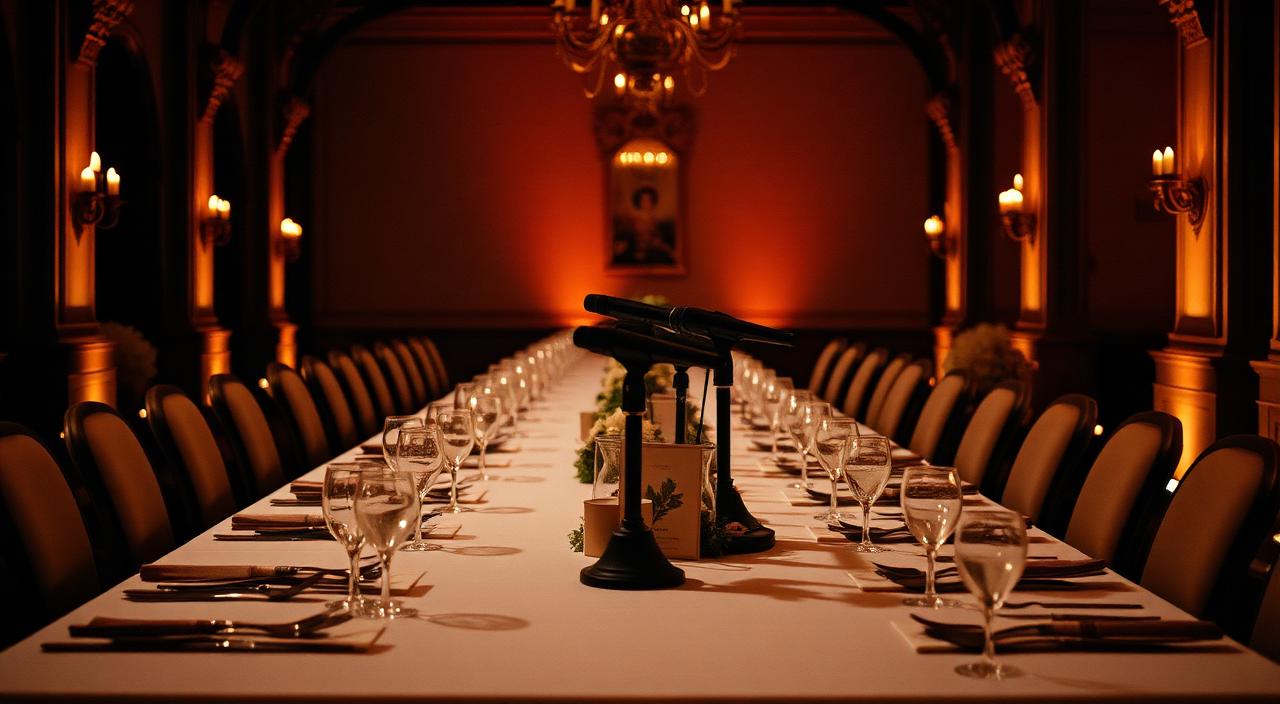
Wedding Speech Order: Who Speaks When (UK and US, Explained)
The speech order is the bit of the wedding that everyone assumes someone else has sorted. Then you turn up on the day, the meal ends, the MC looks at the top table, and there's a brief moment of "who's going first?" that nobody enjoys.
Let's just sort it now. Here's the actual running order, what each speaker is supposed to do, and the modern variations couples are using when they want to mix it up.
If you're here because you've just been told you're best man and you're now panicking about what to say, the generator will get you a first draft in a minute. The order comes later.
The traditional UK order
This is what most British weddings still default to. After the meal, before the dancing.
- Father of the bride — welcomes guests, talks about his daughter, hands her over to the groom, toasts the couple.
- Groom — thanks his new in-laws, thanks his parents, compliments the bridesmaids, toasts the bridesmaids.
- Best man — reads any messages from absent guests, takes the piss out of the groom (gently), tells one good story, toasts the couple again.
That's it. Three speeches, twenty-five minutes total if everyone behaves, and the best man closes out the formal proceedings.
The best man toasting the couple at the end matters because the first toast goes to them too (from the father of the bride). The best man's job is to land the plane on the same note — back to the couple, glasses up, sit down, cue the band.
For the full British etiquette breakdown — what's expected, what's optional, and the unspoken rules — see the UK best man speech rules guide.
The traditional US order
The American running order is similar but with two differences worth knowing.
- Welcome / blessing — sometimes by an officiant, parent, or the couple themselves.
- Best man — usually goes before the maid of honour. Toasts the couple.
- Maid of honour — toasts the couple.
- Father of the bride — closes out (less common at modern US weddings; sometimes the couple skip this entirely).
- The couple — often say a few words at the end to thank everyone.
The big difference: in the US, the best man speaks earlier and the maid of honour gets the closer. In the UK, the best man closes. Don't get this the wrong way round if you're crossing the pond.
Where the speeches actually slot in
Most receptions follow one of three patterns:
- All speeches after the meal: most common in the UK. Coffee and dessert on the table, then speeches start.
- One speech per course: father of the bride before starters, groom before mains, best man before dessert. Couples do this when there's a lot of speeches to get through.
- Speeches before the meal: increasingly popular. Gets them out of the way so the speakers can actually enjoy their food and drink. If your couple is doing this, expect to give yours on an empty stomach — eat something at the prep.
Stuck on the blank page?
Get a personalised first draft in about 60 seconds. Free, no signup.
Build your speech hereModern variations couples are using
The traditional running order isn't sacred. Half the weddings I've been to in the last three years did something different. Common modern moves:
- Bride speaks. Either alongside the groom or instead of the father of the bride. Often the highlight of the day.
- Both parents of the bride speak. Or both sets of parents — short, two minutes each.
- A "speeches montage". The couple invite anyone who wants to say a sentence to grab the mic during dinner. Risky but warm when it works.
- No father-of-the-bride speech. Maybe the bride doesn't have one, maybe she does and they've chosen not to, maybe she's giving her own speech instead. Don't assume.
- Best woman or sister of the groom instead of (or alongside) the best man.
If you're the best man, your job is to ask the couple — or the wedding planner / MC — what the order is, in writing, two weeks before the day. Don't trust the verbal "yeah, you go third" from three months ago.
How long should each speech be?
This is the part nobody enforces and everyone wishes they had.
- Father of the bride: 5–7 minutes.
- Groom: 4–6 minutes.
- Best man / maid of honour: 5–7 minutes each.
- Bride (if speaking): 3–5 minutes.
The total shouldn't exceed 25–30 minutes. Anything more and you've lost the back tables — they're already at the bar.
The short best man speech guide walks through how to come in under four minutes without it feeling rushed, if you want to be the hero of the night.
What the MC actually does
If there's a professional MC or toastmaster, they introduce each speaker and keep things on time. If there isn't, the best man often acts as informal MC — which means you announce the others as well as giving your own speech. Find out which version you're doing.
A safe MC line between speakers: "Thank you, [Name]. Next up, please raise a glass for [Next Name]." That's it. Don't try to be funny between speeches — save it for your actual slot.
The one rule that matters
Whatever order you land on, write it down, give it to the venue and the band, and brief every speaker at least two weeks out. The day-of confusion is what makes the speech section drag. Sorted in advance, it flies.
You've got this. The order is the easy bit. Now go write the speech.